Resources
Before you book an outdoor placement
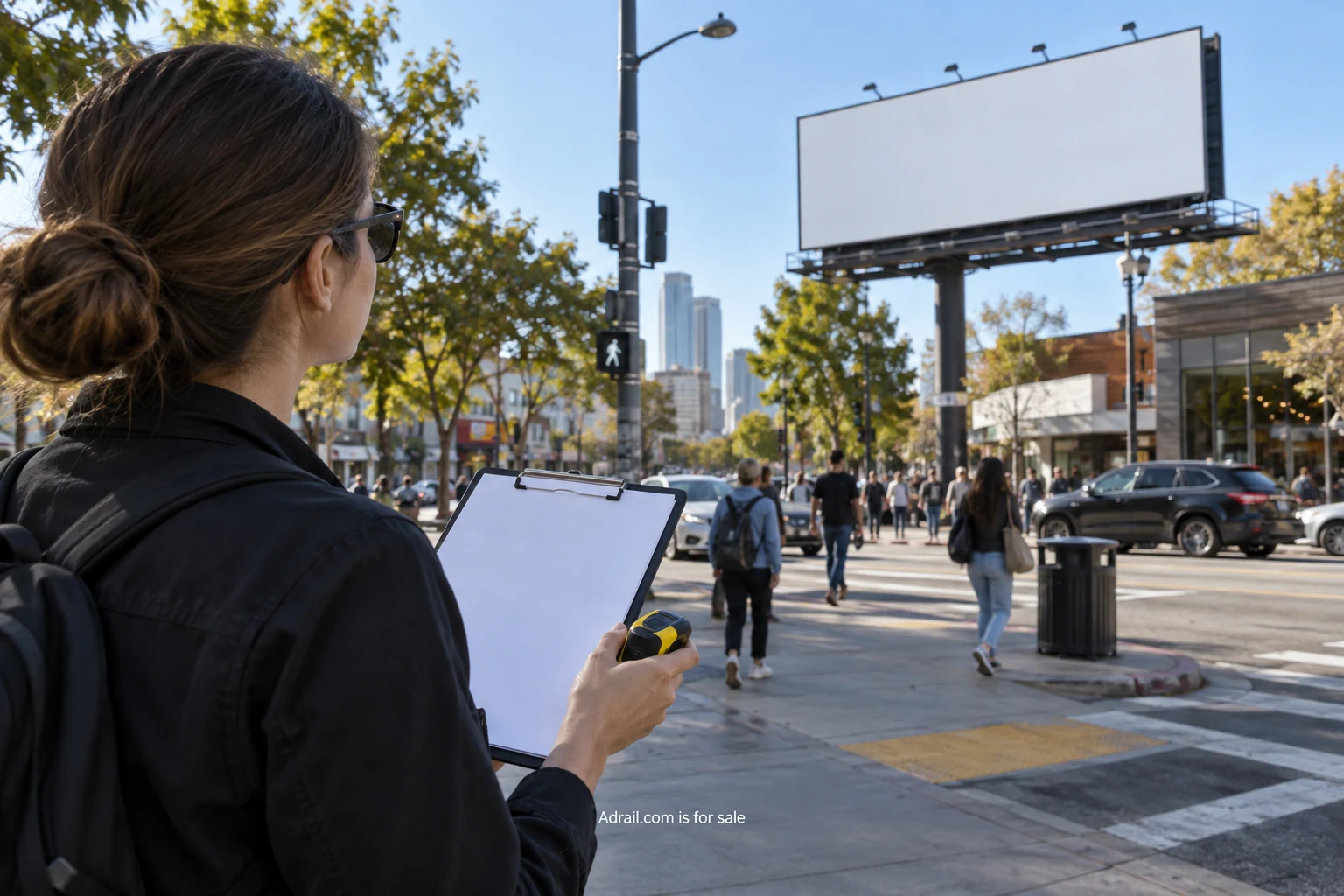
An outdoor placement is a physical location before it is a photograph in a proposal. Its usefulness depends on the approach, the surrounding environment, the audience passing through and whether the creative can communicate in that setting. A site survey helps the buyer turn a promising image into a set of answerable questions.
Use the survey to document observations and unresolved issues. It does not replace the operator’s specifications, audience research or the permissions needed for the placement. It gives the people booking and producing the campaign a shared picture of what they are buying. For a first local campaign, start with a small shortlist that can be assessed consistently.
Confirm the exact face and location
Record the operator’s inventory ID, address or coordinates, format and direction of the advertising face. A structure can contain multiple faces with different approaches. A photograph of one side does not establish the visibility of another. Ask the operator to identify the offered face on a map and in the supporting photographs.
Check whether the proposed inventory is a single fixed location, a network package or a selection that can change before the campaign begins. Those arrangements require different review methods. If substitutions are possible, ask how the buyer will be informed and what information will be provided about the replacement.
Keep the record precise enough that a designer, installer and buyer can refer to the same placement. Include the campaign dates and the date of the survey. A location assessed several months earlier may have changed, so note any information that needs reconfirmation closer to installation or launch.
Follow the actual approach
Assess the view from the path the intended audience takes. A straight-on photograph from the opposite sidewalk can make a placement look clearer than it is to someone approaching along the street. Record the approach direction, viewing angle and any point at which the message becomes obstructed.
Use safe, lawful observation points. If a vehicle-based view matters, arrange for a passenger to document it or request appropriate footage from the operator. The survey does not require the buyer to stop in unsafe places or handle a camera while driving. A clear note about an unobserved approach is better than a risky attempt to capture it.
Notice how the view changes along the route. Trees, parked vehicles, street furniture and neighboring signs can affect what is visible. Describe the observation specifically: which portion of the face is hidden, from which position and at what time. “Good visibility” is too broad to help a designer or to support a later discussion with the operator.
Separate traffic from audience evidence
Ask what each audience number in the proposal represents. A traffic count describes something different from an audience estimate, and both differ from the number of people who will remember a message. Record the measurement provider, period, geography and whether the estimate applies to the exact face being considered.
Geopath’s research methodology describes circulation as a foundation of outdoor measurement, while its broader methodology incorporates visibility and audience characteristics. That distinction is useful when comparing proposals. Ask the operator to explain the specific measure being quoted rather than treating all large numbers as interchangeable.
Connect the evidence to the campaign’s reader or customer. A local service may care about a particular catchment area; an event may care about routes used by likely attendees. The survey can identify nearby destinations and travel patterns worth investigating, but a site visit alone cannot establish the demographic composition of everyone passing by.
Look at the surrounding context
Photograph or describe what sits around the placement. Consider competing visual messages, nearby businesses, construction and the character of the street. A message suitable for a pedestrian shopping district may need a different treatment from one seen briefly from a moving vehicle. Bring that context into the creative brief before design begins.
Check the location at a time relevant to the campaign where practical. A daytime photograph may not answer questions about an evening placement. Ask how illumination operates and whether scheduled maintenance or seasonal conditions could affect the campaign period. Distinguish observations from operator assurances in the record.
Write down possible changes rather than guessing their impact. If scaffolding is present, ask who can confirm the removal schedule. If foliage is relevant, request recent photographs from the intended season. If the view cannot be verified, leave that question open in the buying decision instead of describing it as resolved.
Match the creative to the physical surface
Request the production specification for the exact format and operator. Capture dimensions, artwork requirements, material requirements where applicable, delivery method and deadlines. For digital inventory, ask about file type, duration, scheduling and any restrictions on motion. Avoid borrowing a specification from another location because the surfaces appear similar.
The OAAA guidelines and standards collection is a useful starting point for industry guidance, but the operator still needs to confirm the requirements for the actual booking. Keep that confirmation with the site record. A generic guide should help frame questions, not substitute for the current production sheet.
Review a mockup using the observed approach rather than only a large desktop preview. Ask whether the main message and destination can be understood in the available context. Do not rely on tiny details to carry the campaign’s purpose. If a QR code is proposed, discuss whether the location offers a safe, practical opportunity for someone to use it.
Ask how delivery will be evidenced
For a printed placement, ask who arranges production, delivery, installation and removal. Identify the person who confirms installation and what evidence the buyer receives. A dated photograph showing the correct face can answer different questions from a production receipt showing that material was printed.
For digital inventory, ask what the delivery report contains and how it relates to the purchased schedule. Clarify the distinction between a file being accepted into the system and the advertising actually running. Request a sample report so the buyer knows what information will be available after the campaign.
Record how outages, damage or missed installation dates are handled under the proposed booking terms. The survey should surface these operational questions before the deadline. It should not promise a remedy that the operator has not agreed to provide. Put the final arrangement in the applicable booking documents.
Build a shortlist with visible unknowns
Compare sites using the same fields: exact inventory, approach view, relevant context, audience evidence, production requirements, dates and unresolved questions. Add the quoted media and production costs as supplied. Separate facts observed during the visit from claims in the proposal and decisions made by the campaign team.
For a hypothetical local workshop launch, one site might have a clear pedestrian approach near related businesses while another offers a larger surface along a road. The first may support a more detailed message; the second may require simpler creative. The right choice depends on the intended audience and action, which should already be written in the brief.
Before booking, send the operator a concise list of remaining questions with the inventory IDs attached. Ask for updated photographs or specifications where evidence is missing. Once the answers arrive, record the selection and the reasons behind it. That small record gives the production team a usable brief and gives the buyer a fair basis for reviewing whether the purchased placement was delivered as agreed.

About Michael Santiago
Michael founded i-Newswire.com in 2007, growing through iNewswire.com to the category-defining Newswire.com. That climb reinforced the value of a clear, pronounceable brand. The business sold to Issuer Direct for $44 million in 2022. Today, he develops premium domains and companies through OnlineBusiness.com.